
If you’ve been following ski forecasts, you’ve probably seen the headlines: “Super El Niño,” “historic warming threshold,” “nightmare for Western skiing.” And if you ski in Vermont, you’re probably wondering what this means for Killington, Stowe, Jay Peak, and the rest of the East Coast mountains.
Here’s the quick and dirty version: It’s complicated, and anyone telling you they know exactly what’s going to happen is lying. But we can look at the data, understand what El Niño does (and doesn’t) mean for Vermont, and make smarter decisions about when to book, where to ski, and what to expect this winter.
What Actually is El Niño?
El Niño is a climate pattern where the Pacific Ocean near the equator heats up more than usual, and that warming shifts weather patterns across the entire planet. For the western U.S., this usually means less snow and warmer temperatures—bad news if you’re skiing in California or the Rockies.
For the eastern U.S., it’s a cluster of a mess. El Niño doesn’t have a firm “more snow” or “less snow” outcome for Vermont the way it does for the West. What it does is increase variability with huge temperature swings between warm/rainy and cold/snowy, fewer consistent mid-winter weeks where the snowpack just builds steadily.
The 2026-27 El Niño is tracking as a Super El Niño, meaning the ocean warming has exceeded +3 degrees Celsius. That’s a historic threshold, and the last time it happened (2015-16), Vermont had a weird winter: late start, warm January, then a February that dumped 40+ inches in some spots. It wasn’t a total bust, but it wasn’t consistent either.
What the Forecast Says for Vermont
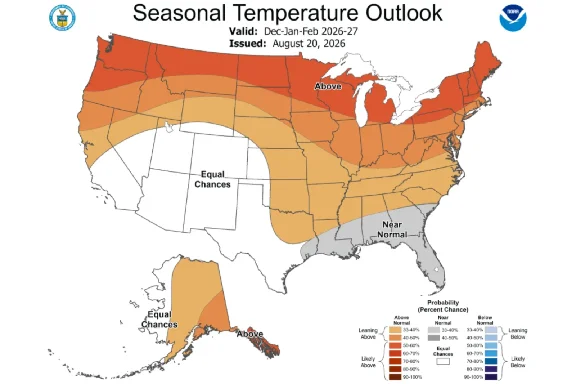
The consensus from OpenSnow, NOAA, and independent forecasters is that Vermont will likely see below-normal natural snowfall this winter. That doesn’t mean zero snow, but it does mean you shouldn’t expect 250+ inch seasons like 2022-23.
Here’s what that looks like in practice:
- Fewer big storms: Instead of 10-12 solid storm cycles, expect 6-8.
- More rain-vs-snow uncertainty: Marginal temperatures mean storms could go either way, especially below 3,000 feet elevation.
- Warmer overall: December and January will probably trend 2-5 degrees above average.
But—and this is important—El Niño also increases the chance of blockbuster Nor’easters. When the subtropical jet stream (which gets juiced during El Niño) aligns with cold Arctic air, you can get 2-3 feet in a single storm. These are rare, but they’re more common during strong El Niños.
So the Vermont forecast is high-variance: Either boom or bust, with less middle ground than a normal winter.
Higher Elevation is Your Safer Bet
If you’re choosing where to ski this winter, elevation matters more than usual.
Above 3,000 feet (Killington’s summit, Jay Peak, Stowe’s upper mountain): These areas stay cold enough to hold snow between storms, and they’re more likely to get snow instead of rain when marginal systems move through.
Below 2,500 feet (smaller resorts, lower base areas): These spots will struggle in an El Niño year. Even if they get snow, warm spells will eat into the base faster than usual.
Killington’s summit is 4,241 feet, and most of the main trails—Superstar, Outer Limits, Skye Peak—are above 3,200 feet. That’s a major advantage when the forecast is calling for a mix of rain and snow and you’re not sure which you’ll get.
Jay Peak (3,861 feet summit) and Stowe (4,395 feet) are in the same boat. If you’re buying a pass this year, resorts with high-elevation terrain are the smarter play.
Snowmaking: The Actual Difference-Maker
Natural snowfall is great, but in the East, the snowmaking crew is what keeps resorts open. And in an El Niño year with warmer temps and less natural snow, snowmaking becomes everything.
Killington has spent $65 million over the last two years upgrading snowmaking, grooming, and infrastructure. That includes enhanced snowmaking, rebuilt systems on lower-mountain trails, and the Snowdon Quad replacement (which doesn’t affect snowmaking directly, but it shows the resort is investing in the long game).
What all of this means: Even if natural snow underperforms, Killington can still open on time (November 11, 2026 is the target) and maintain coverage on core trails through the season. They’ve built their reputation on making snow, and El Niño or not, they’ll keep doing it.
Smaller resorts with weaker snowmaking? They’ll struggle. Plan accordingly.
The Nor’easter Wildcard
The best snow days in Vermont don’t come from steady clipper systems—they come from massive coastal storms that pull Gulf moisture up the Eastern Seaboard and slam into cold air sitting over New England. These Nor’easters can drop 20-40 inches in 24-48 hours, and they’re the reason Vermont skiing can go from “mediocre base” to “best conditions of the season” in a single weekend.
El Niño years statistically increase the odds of these bombs because the subtropical jet is more active. That’s the “boom” in the boom-or-bust forecast.
The catch: Timing is everything. If the cold air isn’t in place when the moisture arrives, you get rain. If the storm tracks too far east, you get nothing. But when it hits right, it’s 3 feet of powder and every trail is open.
No one can predict when or if that’ll happen this season, but the potential is there.
When to Book (And When to Wait)
If you’re planning a ski trip to Vermont this winter, here’s the strategic play:
Book lodging with flexible cancellation policies. El Niño years are bad for locking in trips 3 months ahead. You don’t want to be stuck visiting during a 50-degree rain event in January.
Wait until December to judge the season. By mid-December, the pattern will be clearer. If snowmaking is solid and a few early storms hit, you’re good to go. If it’s 45 degrees and raining in Burlington, rethink your February trip.
Target late January through March. Historically, El Niño winters in Vermont tend to front-load the warm weather (November-December), then stabilize in late winter. March can still be great, especially if a late-season Nor’easter hits.
Avoid Thanksgiving and Christmas unless you’re local. Early season is always a gamble, but in an El Niño year, the odds of limited terrain and marginal snow are higher. If you’re flying in from out of state and dropping $2,000 on a ski week, wait until January or February when the snowpack is firmly established.
What About Jay Peak and Stowe?
If you’re choosing between Vermont resorts, Jay Peak has the elevation (3,861 feet) and the natural snowfall history (they average 350+ inches in a normal year), but even Jay will take a hit in an El Niño winter. The advantage: They’re far enough north that when cold air settles in, it stays longer. If you’re chasing natural snow, Jay is your best bet.
Stowe has the elevation (4,395 feet), the snowmaking, and the terrain, but it’s also expensive and crowded. In a low-snow year, expect every trail to be packed on weekends because people will concentrate at the resorts that are actually open.
Killington’s edge is coverage—155 trails across six mountains means even if only 50% is open, you’ve still got terrain. Smaller resorts don’t have that luxury.
The Honest Take: Temper Your Expectations
If you’re hoping for that famous 2022-23 repeat (Killington got 250+ inches and stayed open until June), this probably isn’t that year. El Niño winters in Vermont tend to be frustrating: pockets of great skiing separated by rain, warm spells, and weekends where you’re skiing on ice and manmade snow.
But here’s the flip side: Killington will still open in November, they’ll still make snow, and there will still be plenty of days where the skiing is good. It just won’t be consistent, and you’ll need to be more strategic about when you go.
If you’re local or can be flexible, this is actually fine—you chase the good days and skip the bad ones. If you’re planning a one-shot trip from out of state, it’s riskier.
What to Watch Between Now and Opening Day
- NOAA’s monthly El Niño updates: They’ll track whether the pattern is weakening or intensifying.
- Early-season snow in the Rockies: If Colorado and Utah are struggling in November, that’s a bad sign for the broader pattern.
- Killington’s opening day: If they open November 11 as planned with solid snowmaking coverage, that’s a good indicator they’re prepared for a marginal season.
- First Nor’easter timing: If a big coastal storm hits in December, the season could turn around fast.